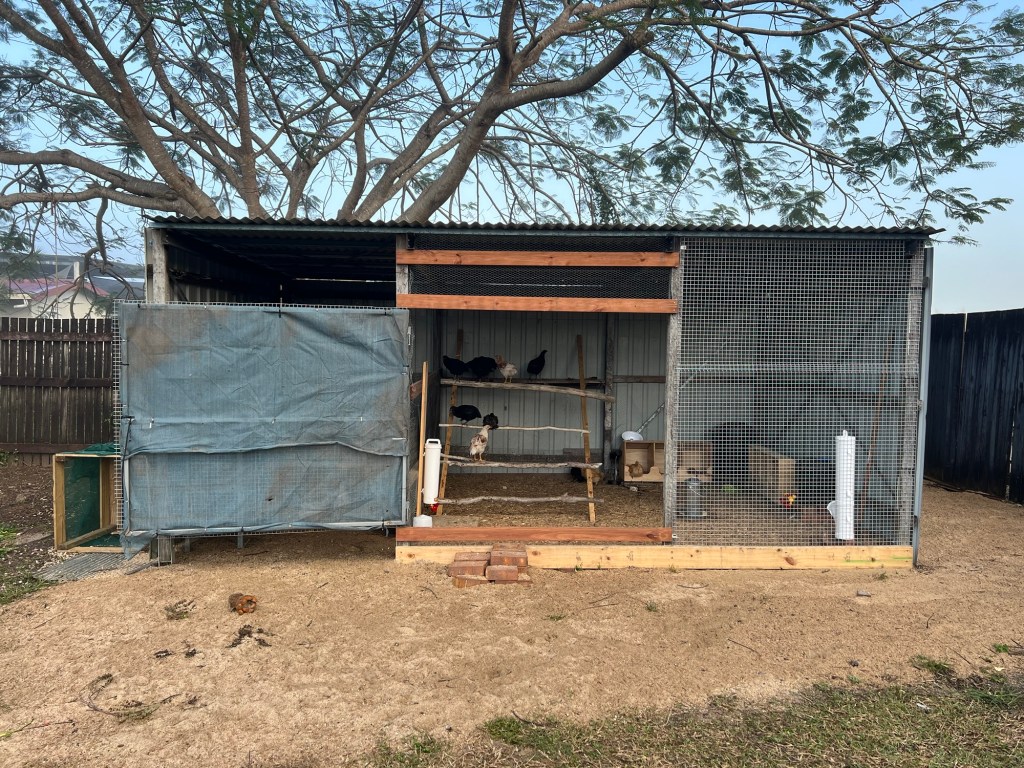
When we paused work on the bigger house renovations to rebuild our budget (and our sanity), we were looking for a smaller, cheaper project to keep us busy — something practical, a little fun, and ideally not involving asbestos. Enter: chickens. With a half-empty shed whose only purpose was housing rusty corrugated sheeting and the top half of a bird cage (?), combined with a growing curiosity about backyard egg-layers, converting that un-utilised space into a coop felt like the perfect side quest. It didn’t require much in the way of tools or spend, and gave us something tangible (and feathery) to focus on while we waited for the next stage of the house to unfold.
If you’ve got an unused shed and a mild-to-moderate obsession with chickens, here’s how we turned ours into a safe, functional, budget-friendly (see the end for a full budget breakdown) home for our flock of sixteen freeloaders.
Predator proofing 🦊
The first step to keeping any chickens safe in their coop is keeping everything non-chicken out. Where we live, that includes predatory birds, snakes, foxes, and even the neighbour’s cats. Life’s pretty scary for our little nuggets on legs, especially when they’re young and downy like ours were.
Luckily, our shed was already roofed and panelled on three sides with Colorbond sheeting, so we just needed to seal any gaps with wire mesh. We used about 60 metres of 1.3 cm bird netting. Regular chicken wire typically has larger gaps (around 5 cm), since it’s designed to keep chickens in rather than predators out — meaning snakes and rodents can still slip through.
We also made sure the mesh had enough overhang at the base so that, once covered with gravel and bedding, nothing could dig underneath (a known move by local foxes).
Flooring 🧼
Keeping our chickens’ feet dry and clean in a humid, often rainy tropical climate was our next big planning challenge. There’s a lot of mixed advice online about what counts as low-maintenance and safe chicken bedding. Without going into too much detail (there are about a hundred chicken-specific blogs for that), Seb and I opted for a layered approach.
We used the pile of gravel already left in the yard (thanks, previous owner!) as our base drainage layer, then added a coarse particle sand over the top. I know sand can be controversial in the chicken world (never thought I’d write that sentence), but we figured a larger grain size would allow the girls to dust bathe and forage safely, without the risk of inhalation. So far it’s worked really well for us, however if I was to rebuild from scratch, I would probably increase the depth of the gravel beneath the sand to give as much drainage as possible since we still do find dampness beneath the top sand layer.
Our final layer is kiln-dried cane mulch, which we’ve found to be absorbent, dry, pleasantly scented, and budget-friendly (wink). With the size of our flock, we change the mulch every 5–10 days to keep things as sanitary as possible.
Accessories 🪴
Now that our chickens were safe from predators and the Queensland wet season, the final step was making this chicken house feel like a chicken home.
A bit of research told us that a mixed flock can bring its own hierarchy challenges, so to avoid a hen-style monopoly, we doubled up on nesting boxes, waterers, and feeders to give everyone a fair share of the resources.
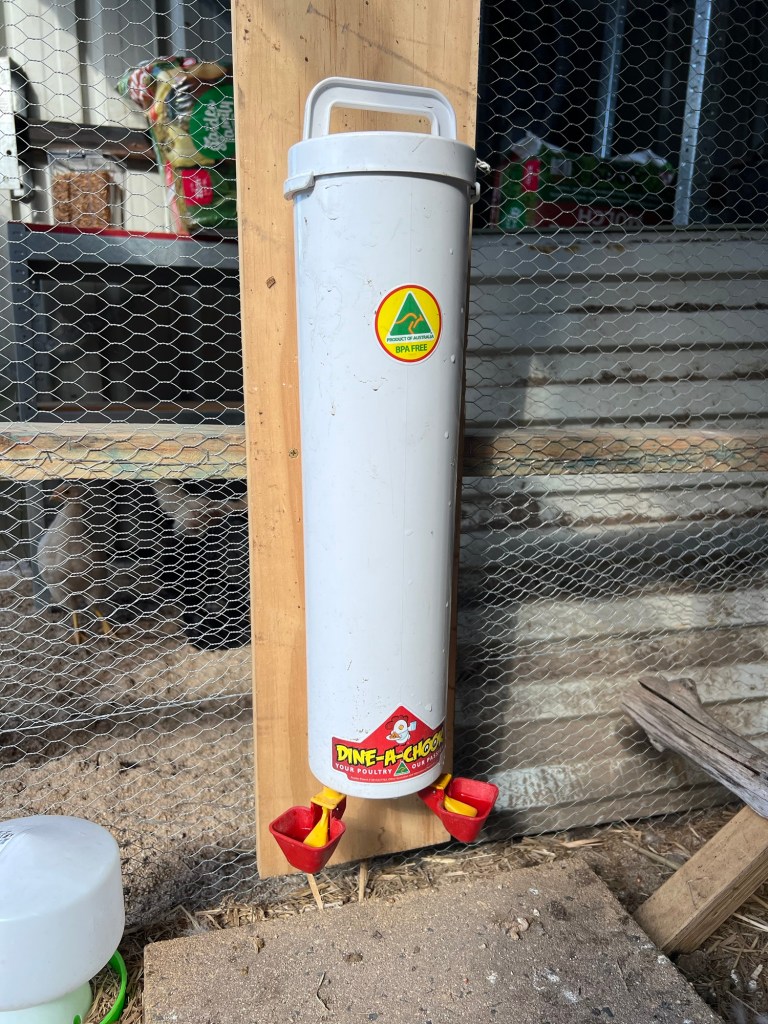
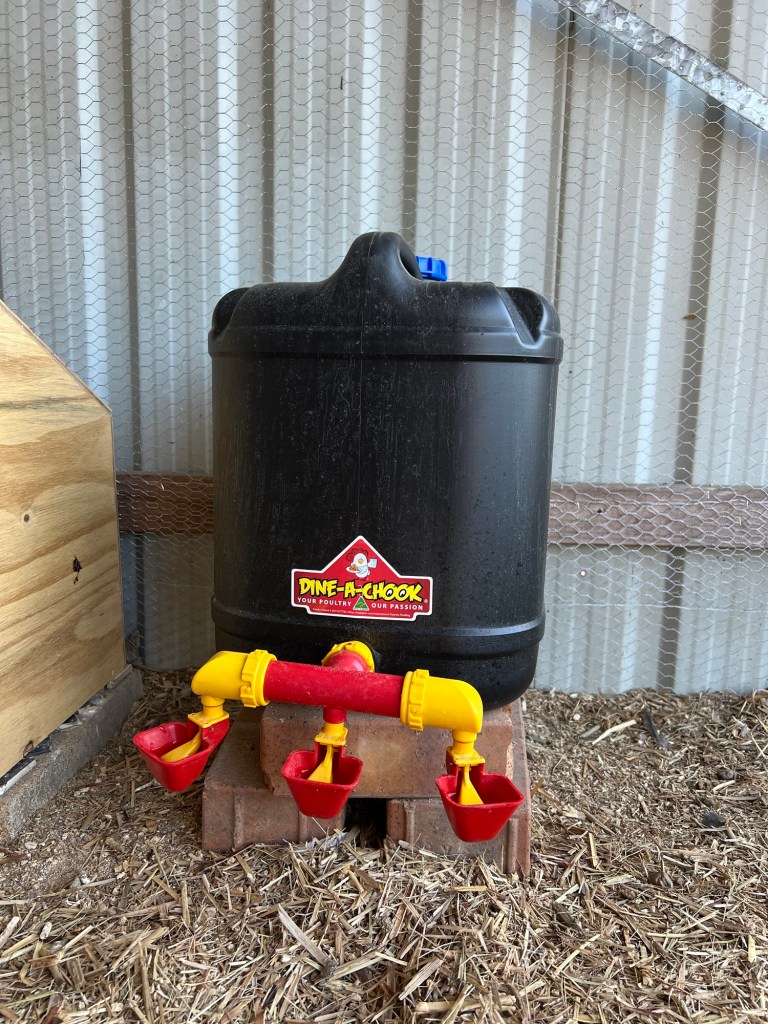
We used one 20L waterer with three drinking nipples and one 4L with two nipples, both from Dine a Chook. This setup gives our flock plenty of water, and the enclosed cups stay clean — meaning I only need to clean and refill them every few weeks.
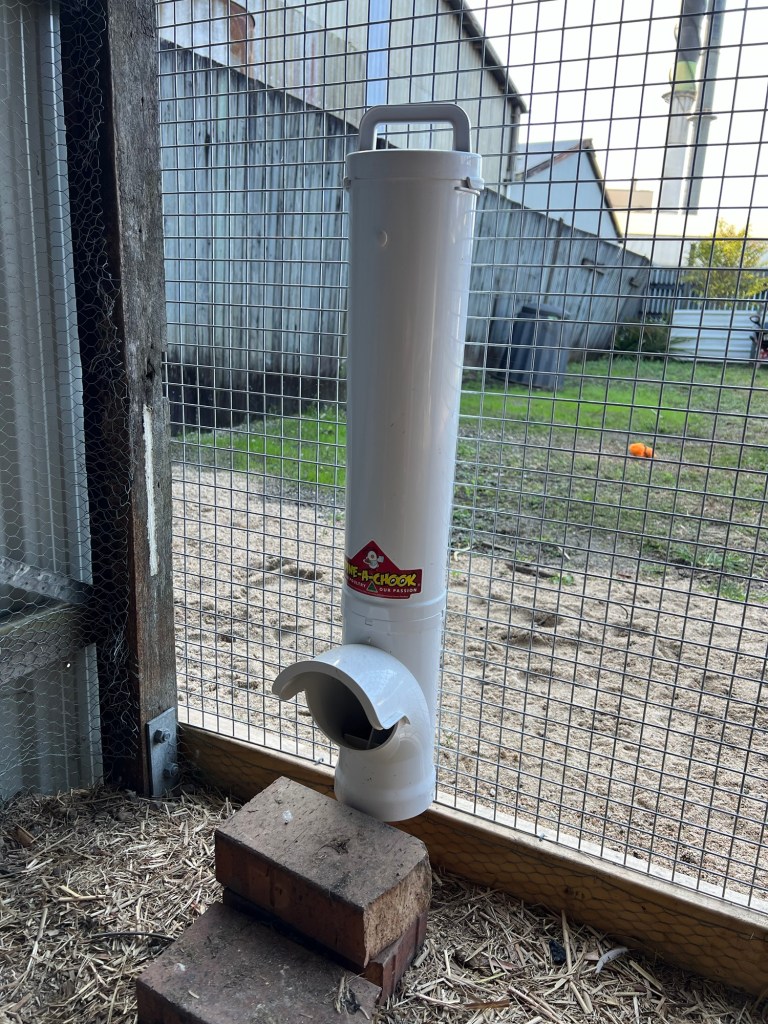
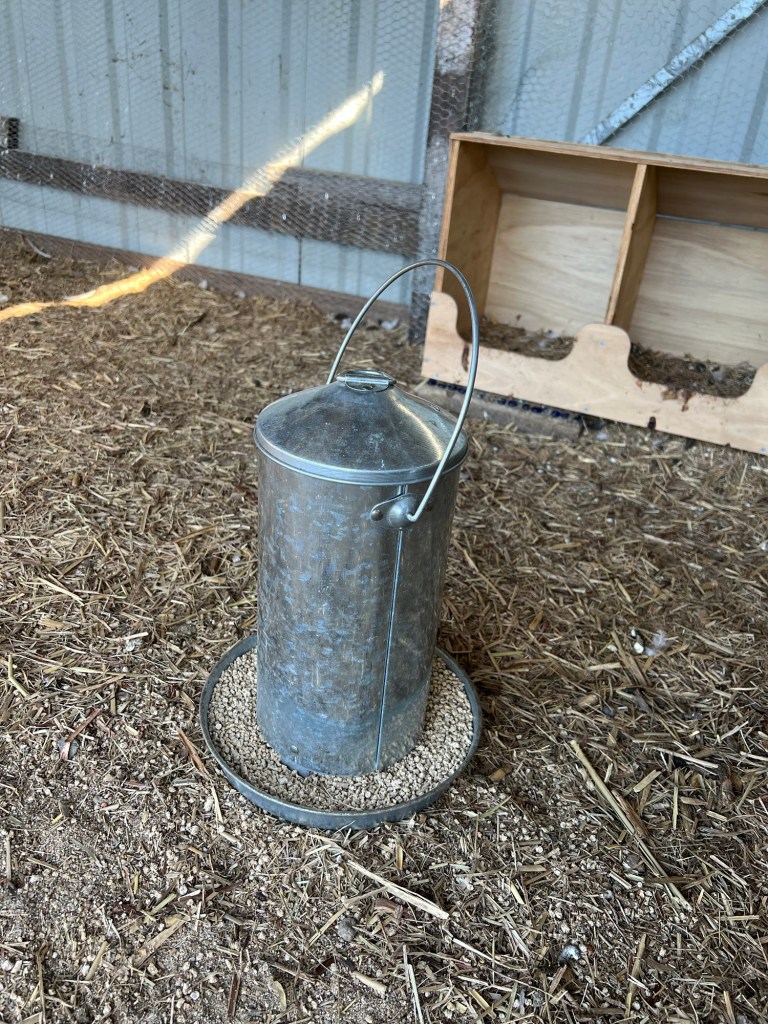
For pellets, we used one 4.7L feeder from Dine a Chook, and one 4kg steel feeder from Petstock. The girls will basically eat as much as we let them, though we try to make up a good portion of their diet from foraging and food scraps. (FYI: They go nuts for corn on the cob. It’s a certified crowd favourite.)
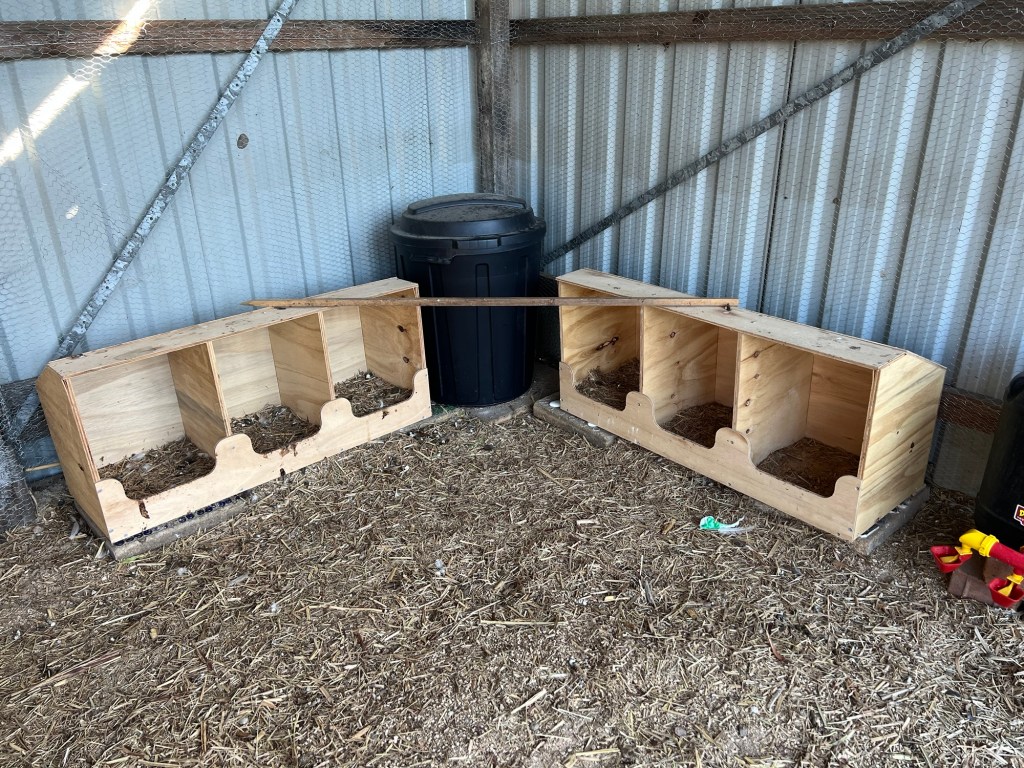
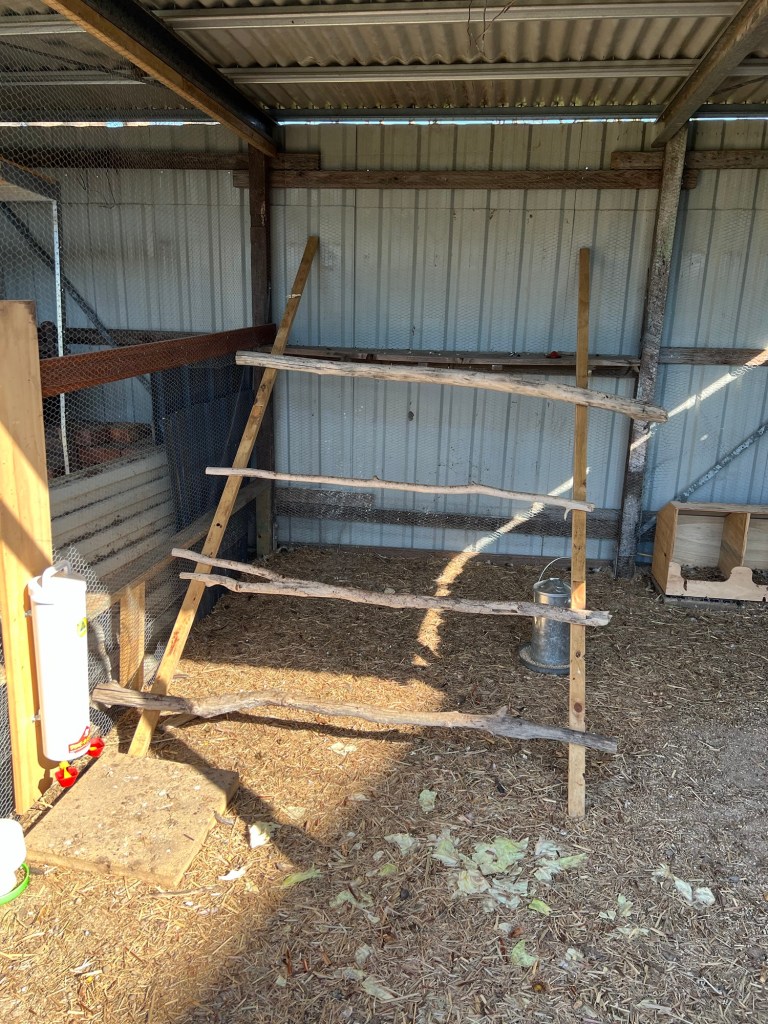
For sleeping, we added two 3-hole nesting boxes propped off the ground on pavers to allow for ventilation. While the girls were still small, we aimed a heat lamp at the boxes so the flock could huddle together at night. As they got older and we wanted to encourage proper roosting habits, we built them a perch: four tiers of locally collected driftwood, nailed to a wooden frame. It took us less than an hour from collection to install — and the girls took to it like fish to water.
Flock selection 🐣
With the coop ready, the final step was getting chickens into it. This is where we may have gone a little… overboard.
It started innocently enough with six week-old Silkies from a local breeder. That was the last logical decision we made.
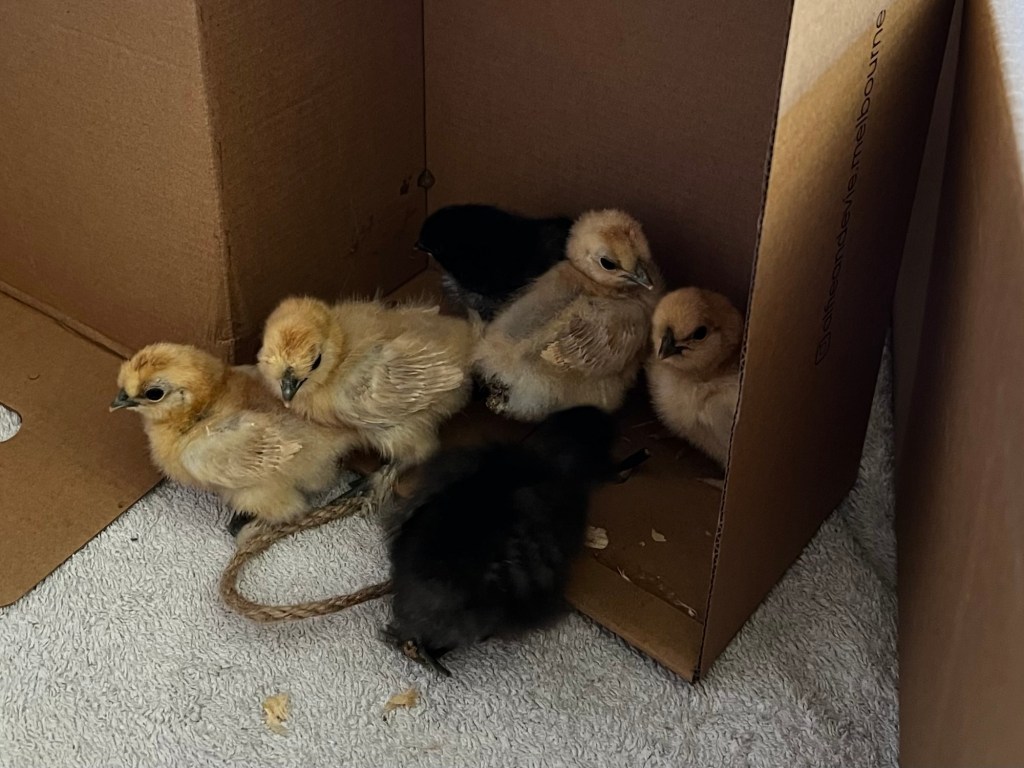
Because Silkies are small and not the most consistent layers, we planned to bulk out the flock with some commercial layers. But when I went to pick them up, I must have experienced a cuteness blackout (it’s a real thing!) and somehow came home with ten. Just like that, we went from six manageable chickens to sixteen.
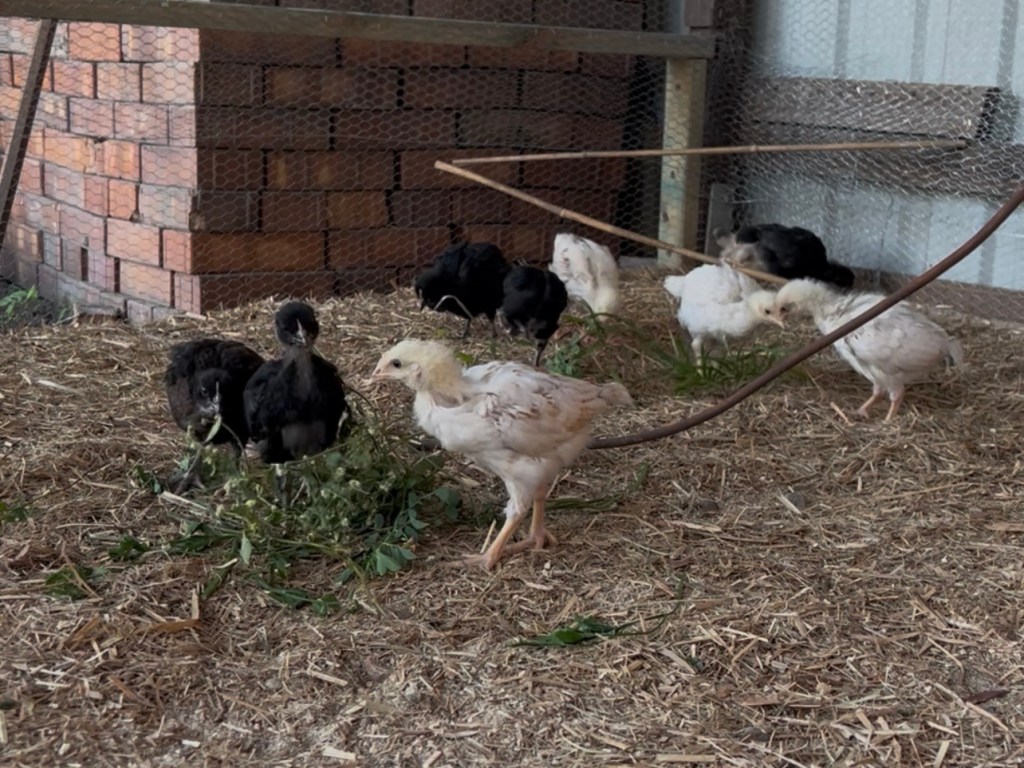
We’ve got a few lingering doubts about whether that’s too many for our 4×4 m space, but so far everyone seems happy and healthy. We’ll reassess once they’re all fully grown.
Conclusion
Building this coop was one of those projects that seemed simple and cheap enough to entertain us while we rebuilt our funds for the rest of the renovation, and inevitably spiralled into something both consuming and rewarding. Our setup is definitely more practical than pretty now, but it works, and we’ve got a whole list of ideas for future upgrades (solar lights you’re up first).
Our little flock brings so much character (and compostable material) to the yard and even if they’re not laying golden eggs just yet, they’ve already earned their keep in entertainment alone.
If you’re planning your own shed-to-coop journey, I hope this gave you a few helpful ideas (or at least a sense of solidarity). And if you’re here just to laugh at our descent into full-blown chicken parenthood… well, fair enough.
 Level-ish